7 Warning Signs Your Water Heater May Be Ready to Fail
Your water heater is one of the hardest-working appliances in your home. From hot showers and laundry to dishwashing and cleaning, it's something most homeowners rarely think about—until it stops working.
Unfortunately, water heaters don't usually fail without warning. In many cases, they give homeowners several signs that something is wrong before a complete breakdown occurs. Recognizing these warning signs early can help you avoid unexpected cold showers, water damage, and costly emergency plumbing repairs.
At Bryant Plumbing, we've spent more than 33 years helping homeowners and businesses throughout Jacksonville and Northeast Florida repair and replace water heaters. Whether your unit needs a simple repair or it's time for an upgrade, knowing what to look for can help you make the right decision.
Here are seven warning signs that your water heater may be nearing the end of its lifespan.
1. Your Hot Water Doesn't Last as Long as It Used To
One of the earliest signs of a failing water heater is a noticeable decrease in the amount of hot water available.
Maybe your family used to enjoy several showers before the hot water ran out, but now you're getting only one before the water turns cold.
Several issues can cause this, including:
- Sediment buildup inside the tank
- Aging heating elements
- Worn thermostats
- Reduced tank efficiency
- Internal corrosion
While some of these issues can be repaired, they may also indicate that the water heater is beginning to wear out.
2. Strange Noises Coming from the Tank
A healthy water heater should operate relatively quietly.
If you begin hearing:
- Rumbling
- Popping
- Banging
- Knocking
- Crackling
it's often caused by sediment collecting at the bottom of the tank.
As water heats beneath the hardened sediment, steam bubbles become trapped and create loud popping sounds.
Over time, this buildup causes the water heater to:
- Work harder
- Consume more energy
- Wear out faster
- Heat water less efficiently
Routine maintenance can sometimes remove sediment, but severe buildup may shorten the life of the unit.
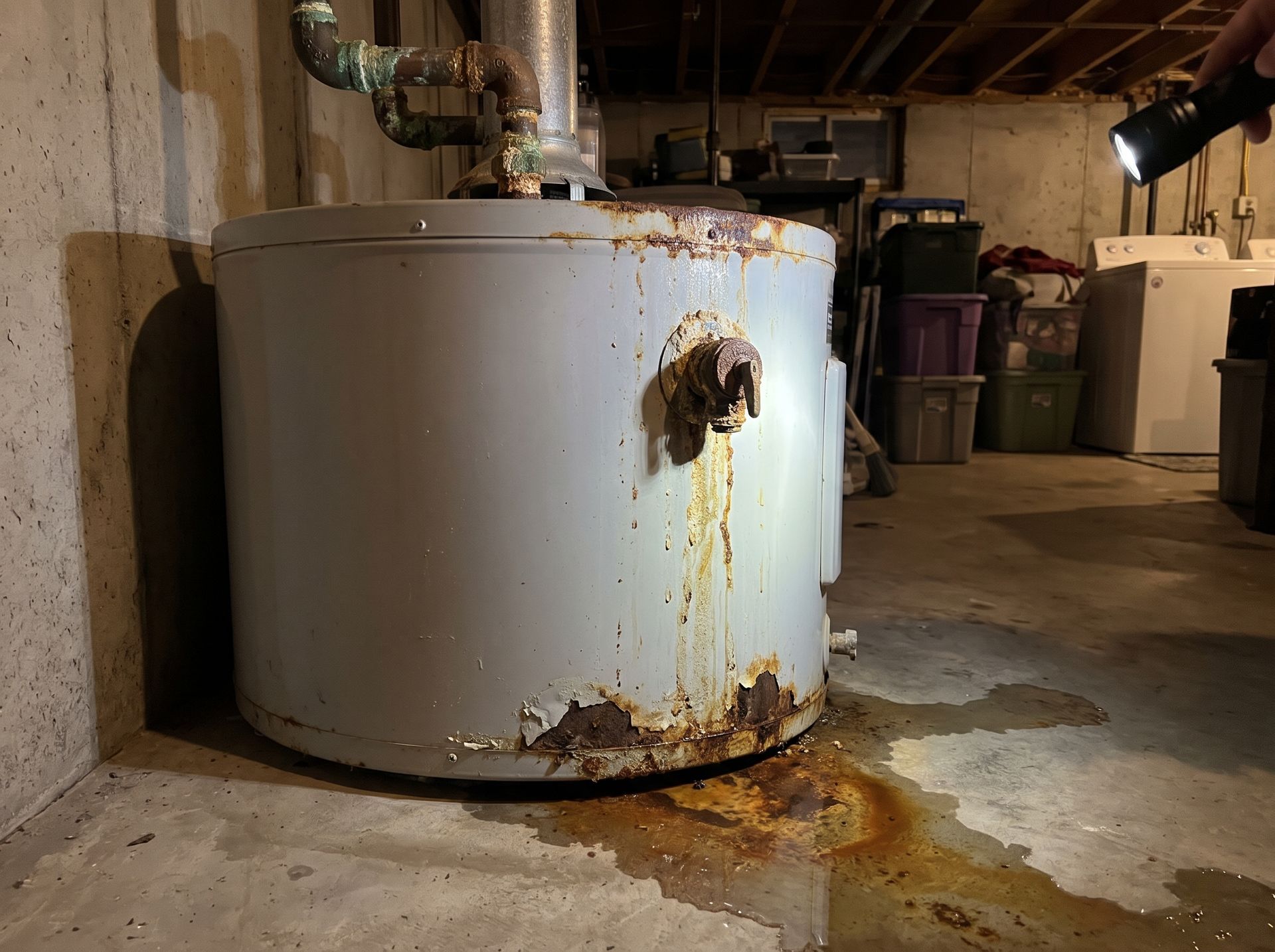
3. Rust-Colored Hot Water
If rusty water only appears when using hot water, your water heater may be corroding internally.
Possible causes include:
- A deteriorating anode rod
- Internal tank corrosion
- Rusty plumbing connections
If corrosion has begun inside the tank itself, replacement is often the safest long-term solution.
Ignoring rust inside the tank can eventually lead to leaks and complete tank failure.
4. Water Around the Base of the Tank
Water pooling around your water heater should never be ignored.
Leaks may come from:
- Loose plumbing connections
- Drain valves
- Pressure relief valves
- Cracked tanks
If the tank itself is leaking, repairs usually aren't possible.
Small leaks often become much larger over time and can cause significant water damage to:
- Flooring
- Drywall
- Baseboards
- Storage areas
- Nearby appliances
Addressing leaks early helps minimize property damage.
5. Inconsistent Water Temperature
Does your shower suddenly become cold without warning?
Are temperatures constantly changing?
Inconsistent hot water can result from:
- Faulty thermostats
- Failing heating elements
- Sediment buildup
- Aging components
While these issues may sometimes be repaired, they also indicate that your water heater isn't operating as efficiently as it should.
6. Your Water Heater Is More Than 10 Years Old
Age alone doesn't necessarily mean a water heater needs replacement.
However, most traditional tank water heaters have an average lifespan of:
8 to 12 years
As they age, the likelihood of:
- Corrosion
- Component failure
- Leaks
- Reduced efficiency
continues to increase.
If your unit is more than a decade old and beginning to show problems, replacement often makes better financial sense than repeated repairs.
7. Your Energy Bills Keep Increasing
Older water heaters gradually lose efficiency.
Sediment buildup, worn heating elements, and aging components force the unit to work harder to heat the same amount of water.
As efficiency decreases, energy consumption increases.
If you've noticed higher utility bills without significantly increasing your hot water usage, your water heater could be one of the reasons.
A newer, more efficient unit may help lower monthly operating costs.
What Causes Water Heaters to Fail?
Several factors contribute to water heater failure over time.
Sediment Buildup
Minerals naturally found in water settle at the bottom of the tank.
Over the years, this sediment reduces efficiency and places additional strain on the heating system.
Corrosion
Water heaters contain an anode rod designed to reduce corrosion.
Eventually, the rod wears out.
Once that happens, the tank itself begins rusting from the inside.
High Water Pressure
Excessively high water pressure places added stress on the entire plumbing system, including your water heater.
Long-term pressure issues can shorten equipment life.
Lack of Maintenance
Many homeowners never service their water heater.
Routine maintenance helps remove sediment, inspect components, and catch small problems before they become expensive repairs.
Should You Repair or Replace Your Water Heater?
The answer depends on several factors.
Repair May Make Sense If:
- The unit is relatively new.
- The repair is minor.
- There are no signs of tank corrosion.
- The water heater has been otherwise reliable.
Replacement May Be Better If:
- The tank is leaking.
- Rust is present.
- The unit is over 10 years old.
- Repairs are becoming frequent.
- Efficiency has significantly declined.
A professional plumbing inspection can help determine which option provides the best long-term value.
Tips to Extend the Life of Your Water Heater
While no water heater lasts forever, proper maintenance can significantly increase its lifespan.
Helpful maintenance includes:
- Flushing sediment annually
- Inspecting for leaks
- Testing the pressure relief valve
- Checking the thermostat
- Inspecting plumbing connections
- Monitoring water pressure
- Scheduling routine professional maintenance
These simple steps can help maximize efficiency while reducing the likelihood of unexpected breakdowns.
Don't Wait Until You Have No Hot Water
Many homeowners continue using a struggling water heater until it completely stops working.
Unfortunately, complete failure often happens at the worst possible time.
Replacing or repairing your water heater before it fails can help you avoid:
- Emergency plumbing service
- Water damage
- Cold showers
- Unexpected repair costs
- Higher utility bills
Planning ahead is almost always less stressful than dealing with an emergency replacement.
Why Jacksonville Homeowners Trust Bryant Plumbing
For more than 33 years, Bryant Plumbing has proudly served homeowners and businesses throughout Jacksonville and Northeast Florida.
Our experienced team provides:
- Water heater repair
- Water heater replacement
- New water heater installation
- General plumbing repairs
- Leak detection
- Emergency plumbing
- Residential plumbing
- Commercial plumbing
We work with both gas and electric water heaters and use quality materials and proven installation techniques to ensure dependable, long-lasting performance.
We also proudly offer discounts for senior citizens, veterans, and first responders.
Protect Your Home with Professional Water Heater Service
Your water heater is too important to ignore when it starts showing signs of trouble. Whether you've noticed inconsistent hot water, unusual noises, rising energy bills, or leaks around the tank, addressing the problem early can help prevent larger repairs and unexpected breakdowns.
If your water heater isn't performing the way it should, Bryant Plumbing is here to help. Our experienced team provides expert water heater repair, replacement, and installation services throughout Jacksonville and Northeast Florida, with 24/7 emergency plumbing available whenever you need it.
Call Bryant Plumbing today at (904) 559-2939 to schedule an inspection and let us help you keep your hot water flowing reliably for years to come.
Contact Bryant Plumbing
Need a trusted plumber? Bryant Plumbing is ready to help with fast, reliable service.
Call us today to schedule your service with our trusted plumbing professionals.
Recent Posts